Home / Printing
Five decoration methods, all under one roof. The right one depends on your artwork, your fabric and your quantity — so here's how we choose, in plain terms.
Quick answer
Photographs, gradients, many colours, 1–100 pieces.
→ DTF transfer
Team rosters, one or two flat colours, personalisation.
→ Heat transfer vinyl
A logo that should look permanent and premium.
→ Embroidery
Events, merch drops, staff shirts, limited colours.
→ Screen printing
Method 01
Direct-to-film prints your artwork onto a transfer film, powders it with adhesive, cures it and heat-presses it onto the garment. It doesn't care how many colours you used, and it doesn't care what the shirt is made of.
Full-colour logos, photo art, gradients, small and mid runs.
Cotton, polyester, blends, canvas, nylon.
One piece. No screen or setup fee.
Very large solid blocks sit heavier than screen ink.
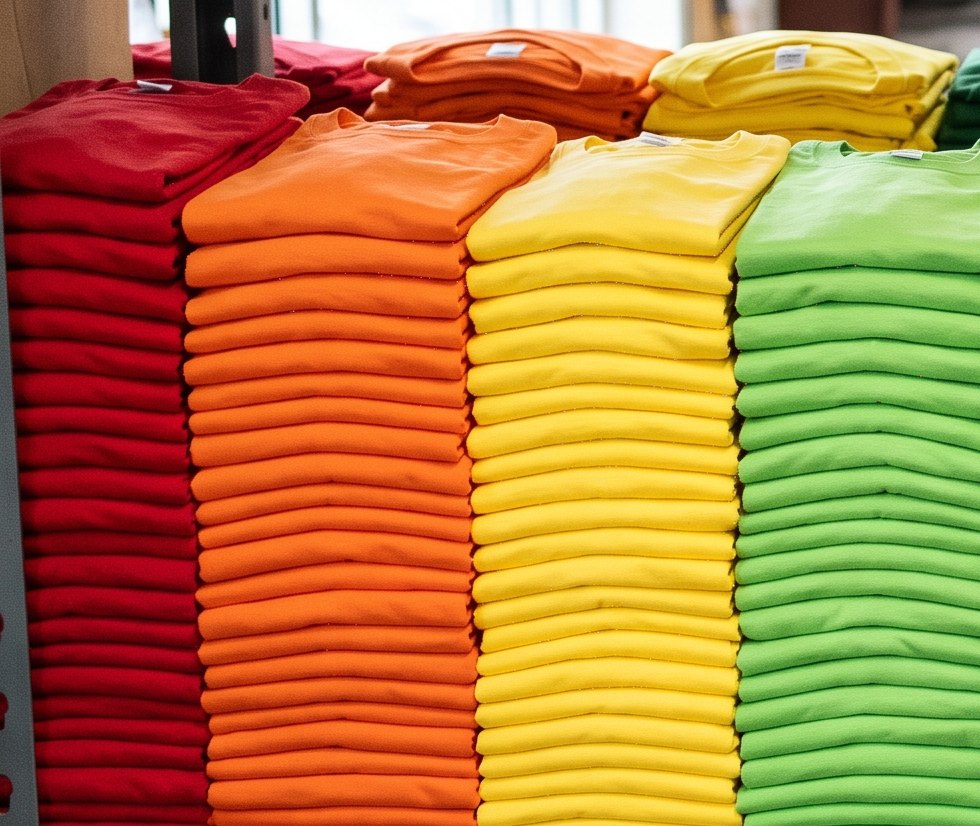 Printed on our own blanks
Method 02
Solid-colour vinyl is cut to the shape of your artwork, weeded by hand and pressed on. It's the cleanest way to do names, numbers and bold flat marks — and the only sensible way to personalise every piece in an order differently.
Method 03
Your logo is digitised into a stitch file, then sewn into the garment. Nothing sits on top of the fabric, so there's nothing to crack or peel — which is why it's the standard for uniforms, workwear and headwear.
One-time digitising per logo; after that, repeat orders run straight from the file. Fine detail and very small text are the practical limits — we'll tell you before we run it if your artwork is going to fight the needle.
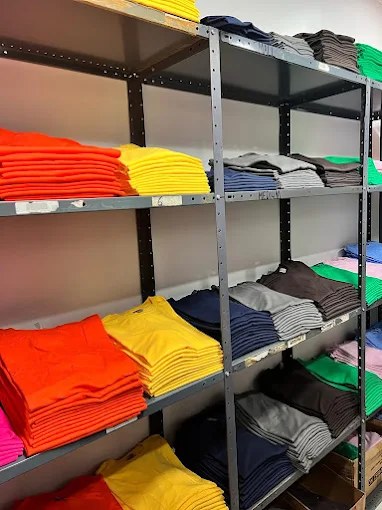 Uniform stock, ready to stitch
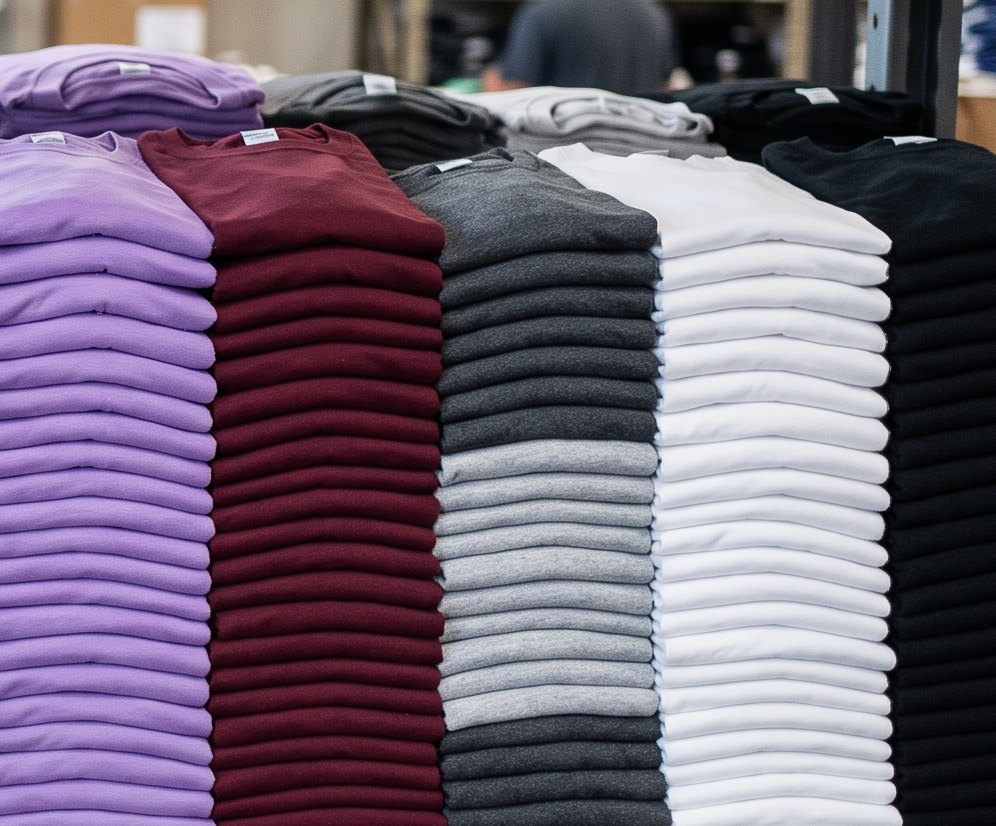 Volume runs start here
Method 04
A screen is burned for each colour in the design, then ink is pulled through it onto the shirt. There's real setup involved — which is exactly why the per-piece cost falls off a cliff once the quantity climbs.
50+ pieces of the same design, one to four colours.
Soft, flat, classic. The finish retail merch uses.
One screen per colour, charged once per design.
Photographs and small runs — DTF wins on both.
Method 05
Heat turns the dye into a gas that bonds with polyester fibres. The colour becomes part of the fabric — you cannot feel the print at all, and it will not crack, peel or fade the way a surface print eventually does.
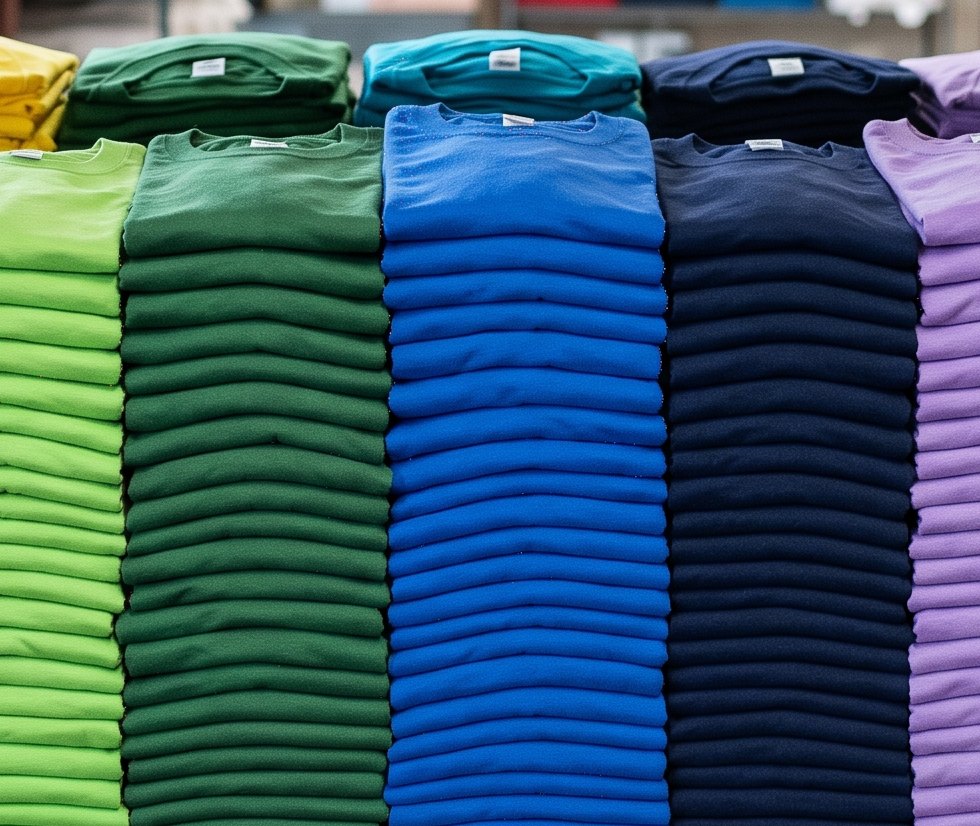 Poly & performance stock
Artwork & files
Good artwork is most of a good print. If all you have is a screenshot, send it anyway — we'll tell you honestly whether it will hold up at size, and what it would take to fix it.
AI, EPS, PDF or SVG scale to any size with no quality loss. Essential for embroidery and screen printing.
For DTF, a transparent PNG at 300 DPI at the size it will actually print. Roughly 3000 px wide for a full front.
Left chest, full front, full back, sleeve — and how wide you want it in inches. If you're unsure, we'll recommend the standard.
Outline your fonts before sending, and give us Pantone references if the brand colour has to be exact.
Ready to run it
We'll pick the method, quote the price and give you a pickup date — usually the same day you ask.